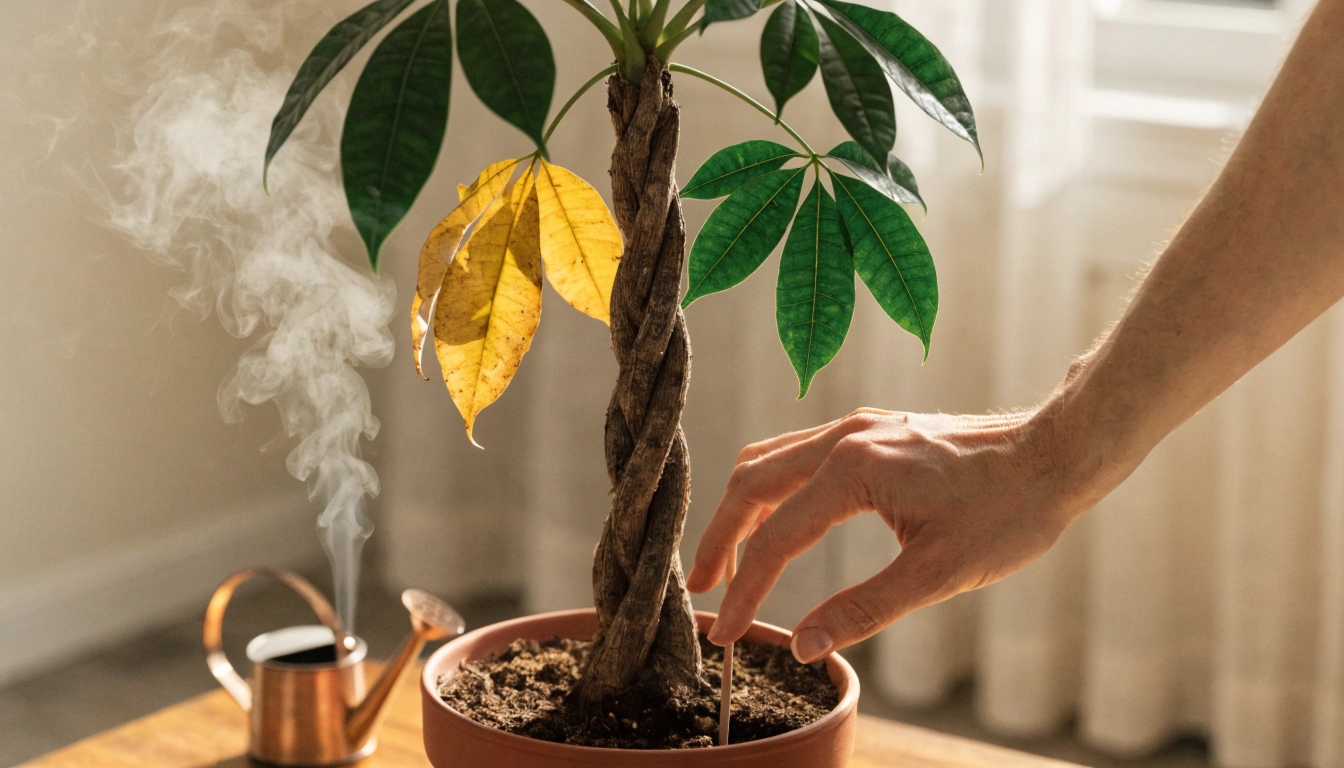
Money Tree Leaves Turning Yellow? Here’s Why (& Fix)
If your money tree’s leaves are turning yellow, the most common reason is too much water or a pot that doesn’t drain well. Root rot from soggy soil is the #1 cause, but light problems, low humidity, and pests can also turn healthy green leaves yellow. The good news: once you spot the real cause, most money trees bounce back within a few weeks.
Below, you’ll find every likely cause, how to tell them apart, and exactly what to do next.
Quick Answer
Yellow leaves on a money tree usually mean the roots are sitting in too much water. Check the soil first — if it’s soggy or the pot has no drainage, that’s your answer. If the soil feels fine, the next suspects are low light, dry air, or a leaf or two shedding naturally as the plant grows.
Common Causes of Yellow Leaves on a Money Tree
Money trees (Pachira aquatica) are tough plants, but yellow leaves are their main way of telling you something’s off. Here’s what’s usually behind it.
1. Overwatering (The #1 Cause)
Money trees like their soil to dry out partway before the next watering. When the roots sit in wet soil for too long, they can’t breathe, and they start to rot. Yellow leaves — especially ones that feel soft or mushy — are often the first warning sign.
Check for these clues:
- The pot has no drainage hole, or water pools in the saucer
- The soil feels wet several inches down
- Yellow leaves are also drooping or feel limp
2. Underwatering
It sounds backward, but dry soil can cause the exact same yellow leaves. If you’ve been forgetting to water, or the pot dries out completely between waterings, the plant sheds leaves to save energy. These leaves are usually crispy or dry rather than soft.
3. Too Much or Too Little Light
Money trees want bright, indirect light. Direct sun through a window can scorch the leaves, turning them yellow or brown at the edges. On the flip side, a dark corner with almost no natural light will also cause slow yellowing, because the plant can’t make enough energy to stay green.
4. Low Humidity
Money trees originally come from humid, tropical areas. Dry indoor air — especially in winter with the heat running — can stress the plant, leading to yellow or crispy leaf edges before full leaves turn yellow.
5. Pests
Spider mites, mealybugs, and scale are small insects that feed on plant sap. A weakened plant is more likely to attract them. Check the undersides of leaves and where leaves meet the stem for tiny bugs, webbing, or sticky residue.
6. Nutrient Issues
Too little fertilizer over a long time can cause pale or yellow new growth. Too much fertilizer can burn the roots, which also shows up as yellowing. Neither is usually the first thing to check, but it’s worth ruling out if other causes don’t fit.
7. Natural Leaf Aging
Not every yellow leaf is a problem. If it’s just one or two older leaves near the bottom of the plant, and the rest of the plant looks healthy with new growth, that’s normal aging. Plants shed older leaves as they grow new ones.
How to Tell Overwatering From Underwatering
This is where most people get stuck, since both problems cause yellow leaves. Here’s a simple way to tell them apart:
| Sign | Overwatering | Underwatering |
| Soil feel | Wet, heavy, cold | Bone dry, pulls from pot edges |
| Leaf texture | Soft, mushy, limp | Crispy, dry, curling |
| Smell | Sour or musty soil | No unusual smell |
| Speed | Gradual yellowing, then sudden drop | Yellowing spreads slowly |
My Advice
From what I’ve seen with houseplants like this, the biggest mistake isn’t the first mistake — it’s the panic reaction after it. Someone notices yellow leaves, assumes the plant is thirsty, and waters it again even though the soil is already wet. That’s usually what turns a fixable problem into a dying plant.
My advice: before you do anything, stick a finger about two inches into the soil. Don’t guess. That one check saves more money trees than any fertilizer or plant food ever will.
Step-by-Step Guide to Fixing Yellow Leaves
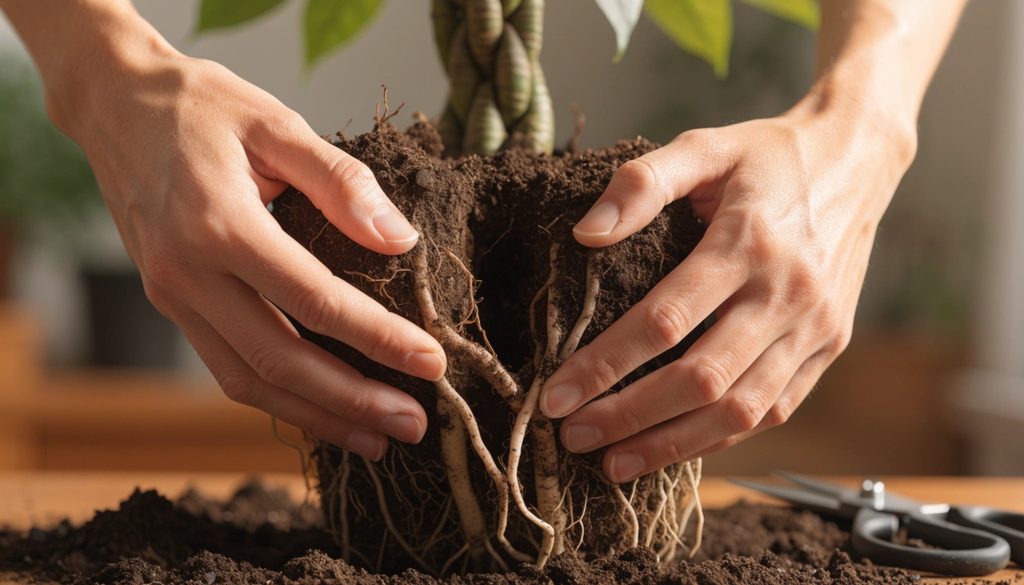
- Check the soil moisture. Push a finger or a wooden skewer into the soil. Wet and heavy means cut back on watering. Dry and crumbly means it needs a drink.
- Check the pot’s drainage. Make sure there’s a drainage hole and that water isn’t collecting in the saucer. If there’s no hole, consider repotting into one that has proper drainage.
- Inspect the roots if it seems serious. Gently remove the plant from its pot. Healthy roots are firm and light-colored. Dark, mushy, or smelly roots mean root rot — trim off the damaged parts with clean scissors and repot in fresh, dry soil.
- Move it to better light. Place your money tree near a window with bright, indirect light — not direct sun, and not a dim corner.
- Raise the humidity if needed. A pebble tray, occasional misting, or a small humidifier nearby can help, especially in dry winter months.
- Check for pests. Wipe leaves with a damp cloth and look closely at stems and leaf joints. Treat any bugs you find with insecticidal soap or neem oil.
- Remove yellow leaves. Once you’ve fixed the cause, trim off fully yellow leaves. They won’t turn green again, and removing them lets the plant focus energy on new growth.
Common Problems or Mistakes
- Watering on a fixed schedule instead of checking the soil. Every home is different — light, pot size, and season all change how fast soil dries.
- Using a pot with no drainage hole. This is one of the most common root rot causes, even for careful waterers.
- Repotting into a much bigger pot. Extra soil holds extra water the roots don’t need yet, which raises the risk of root rot.
- Fertilizing a stressed plant. Adding fertilizer while the plant is already struggling can make yellowing worse, not better.
- Giving up too early. Money trees are slow to show improvement. Give changes two to three weeks before deciding they didn’t work.
Helpful Tips
- Water deeply but less often — let the top half of the soil dry out between waterings.
- Always empty the saucer after watering so roots aren’t sitting in standing water.
- Rotate the plant every few weeks so all sides get even light.
- Use a pot only slightly larger than the current one when repotting.
- Wipe dust off leaves occasionally — clean leaves absorb light better.
Frequently Asked Questions
1.Is it normal for a few money tree leaves to turn yellow?
Yes. If it’s just one or two older leaves near the bottom and the plant is otherwise growing well, it’s normal aging and nothing to worry about.
2.Should I cut off yellow leaves on my money tree?
Yes, once you’ve fixed the cause. Yellow leaves won’t turn green again, and trimming them helps the plant put energy into healthy growth.
3.How often should I water a money tree?
There’s no fixed number — check the soil instead. Water again when the top couple inches feel dry, which is usually every one to two weeks depending on light and season.
4.Can too much sun cause yellow leaves?
Yes. Direct, intense sunlight can scorch money tree leaves, turning them yellow or brown, especially at the edges. Bright, indirect light is best.
5.How do I fix root rot on a money tree?
Remove the plant from its pot, trim away any dark or mushy roots with clean scissors, and repot in fresh, well-draining soil. Cut back on watering afterward.
6.Why is my money tree dropping leaves suddenly?
Sudden leaf drop is often a stress response to a big change — overwatering, a cold draft, or being moved to a new spot. Check watering and location first.
7.Does a money tree need fertilizer?
It benefits from light feeding during the growing season, but it doesn’t need much. Too much fertilizer can burn roots and cause yellowing, so less is safer than more.
Conclusion
Yellow leaves on a money tree almost always trace back to watering, light, or humidity — and root rot from overwatering is the most common culprit. Check the soil first, look at the roots if things seem serious, and adjust light and humidity as needed. With a few small changes and a little patience, most money trees recover and grow new, healthy green leaves within a few weeks.
Author:
MUHAMMAD AHMAD
SEO Specialist
Founder & Owner of TechXora.org and CareerZon.org
Also Read: