What Half Dollars Are Worth Money? (Full Guide)
If you found an old half dollar in a drawer, a jar of change, or a relative’s collection, you’re probably wondering the same thing most people do: is this actually worth more than fifty cents? The short answer is yes, some half dollars are worth much more than their face value — and the biggest reason usually comes down to when they were made and what they’re made of.
This guide breaks it down in plain language, so you can check your own coins without needing to be a coin expert.
Quick Answer
Half dollars made before 1965 are usually worth the most because they contain real silver, not the copper-nickel mix used today. Certain years, mint marks, and rare printing errors can also make a coin worth more to collectors. The exact value depends on the coin’s age, condition, and current silver prices, so it’s always worth double-checking with a trusted coin price guide or a local dealer before you sell.
Why Some Half Dollars Are Worth More Than Others
Not every old coin is automatically valuable. A half dollar’s worth usually comes down to a few key things working together.
1. What the Coin Is Made Of
This is the single biggest factor. Older U.S. half dollars were struck in silver, while modern ones are made from cheaper metals. A silver half dollar carries value just from its metal content alone, on top of any collector interest.
2. The Coin’s Age and Series
Half dollars have gone through several major designs over the decades, including the Barber, Walking Liberty, Franklin, and Kennedy series. Each series has its own history, and within each one, certain years were minted in smaller numbers, which can make them harder to find and more desirable to collectors.
3. Mint Marks and Rare Errors
Small letters on a coin (like a “D” or “S”) show which mint produced it. Some mint locations made fewer coins in a given year, which can raise value. Coins with printing mistakes — like doubled letters, misaligned designs, or off-center strikes — are also often worth searching for, since errors tend to be rare.
4. Condition
A half dollar that’s clean, sharp, and free of heavy wear will almost always be worth more than one that’s scratched, dented, or worn smooth. Collectors use a grading system to describe condition, and higher grades mean higher value.
How to Tell If Your Half Dollar Might Be Valuable
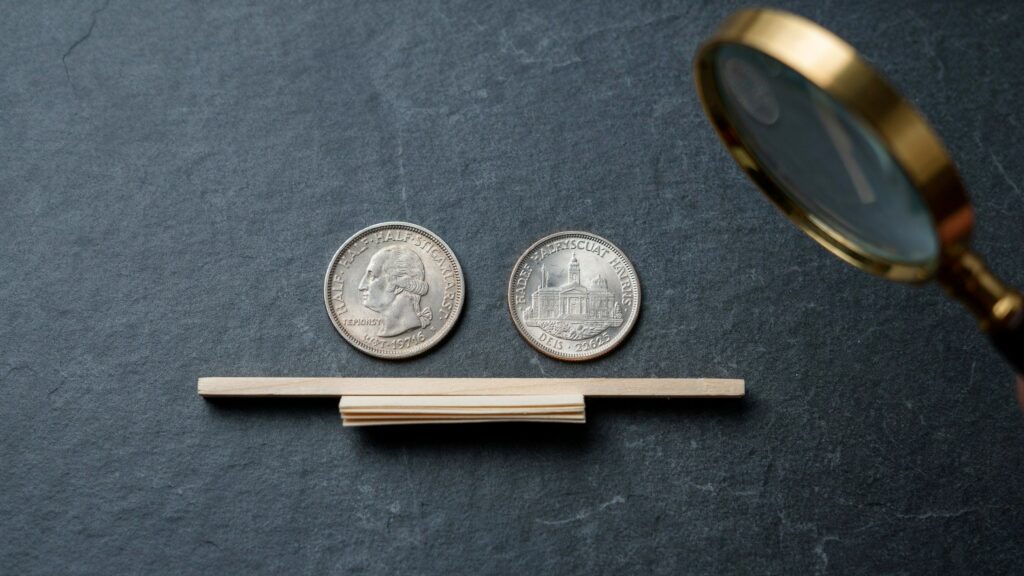
You don’t need special tools to get a first impression of what you’re holding. Here’s what to check.
Look at the Year
Coins made before 1965 are the ones most likely to contain silver. If your half dollar has a date from that period, it’s worth a closer look.
Check the Edge
Silver half dollars typically have a smooth, solid-colored edge. Newer half dollars made from copper and nickel often show a thin copper stripe along the edge. This simple visual check can help you narrow things down quickly, though it’s not a perfect substitute for testing.
Look for Wear and Damage
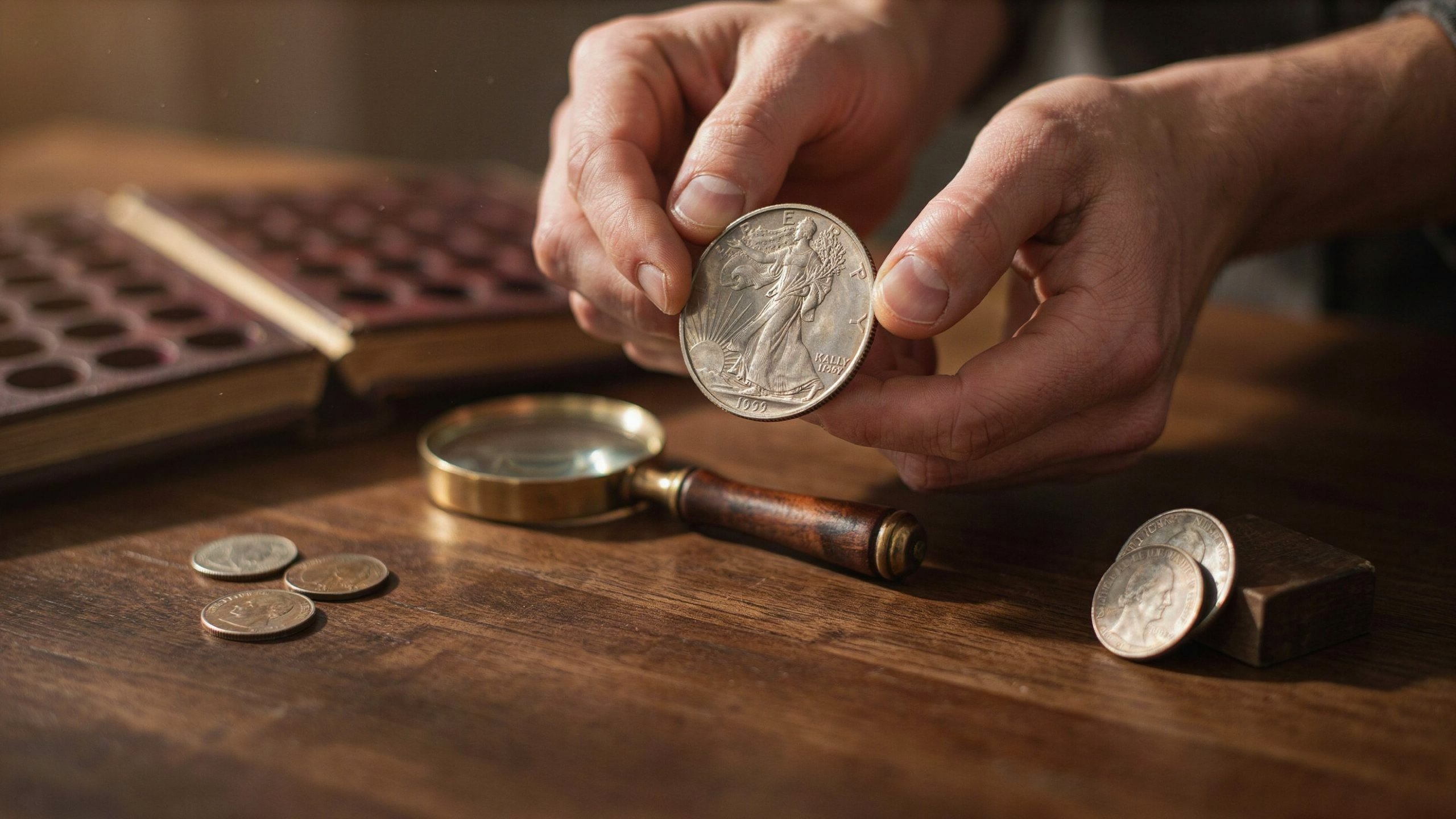
Hold the coin under good light. Are the details — hair lines, feathers, lettering — still sharp, or are they smoothed down? Less wear generally means more value.
Search for Errors
Look closely at the lettering and design for anything that looks doubled, blurry, or off-center. These small differences can be easy to miss but meaningful to collectors.
Step-by-Step Guide to Checking Your Half Dollar’s Value
- Find the date and mint mark. These are usually on the front (obverse) or back (reverse) of the coin.
- Identify the series. Compare the design to known types like Walking Liberty, Franklin, or Kennedy half dollars.
- Check the edge and color. Look for a solid silver-colored edge versus a copper stripe.
- Assess the condition. Note how sharp the details are and whether there’s noticeable wear.
- Look up your specific coin. Use a current, trusted coin price guide to compare your coin’s year, mint mark, and condition.
- Get a second opinion if needed. If you think you may have something rare, a local coin dealer or a coin-collecting club can give you a hands-on evaluation.
Common Problems or Mistakes People Make
- Cleaning the coin. It’s tempting to polish an old coin, but cleaning can actually lower its value by damaging the original surface. Leave it as-is.
- Assuming “old” always means “valuable.” Age matters, but plenty of older coins are common and worth close to face value. It’s the combination of age, material, and rarity that counts.
- Skipping the condition check. Two coins from the same year can have very different values depending on wear.
- Selling too fast. Some people sell a jar of old coins for a flat price without checking if a few pieces are worth much more individually.
- Trusting outdated price lists. Coin values, especially for silver coins, can shift with the market, so always check recent information before deciding to sell.
Helpful Tips
- Keep coins in a soft holder or coin flip instead of a pocket or loose jar to avoid extra wear.
- Sort your coins by year and series first — it makes checking values much faster.
- If you have a large collection, focus on identifying the pre-1965 coins first, since they’re the most likely to carry extra value.
- Compare your coin to clear reference photos so you can spot small design differences.
- When in doubt, get an in-person opinion before selling, especially for coins that look unusual or damaged in an interesting way.
Frequently Asked Questions
1.What years of half dollars are worth money?
Half dollars made before 1965 are generally worth more because they contain silver. Certain later years with low mintages or special errors can also carry added value.
2.How can I tell if my half dollar is silver?
Check the date first — coins before 1965 are your best candidates. You can also look at the edge for a solid silver-gray color rather than a copper stripe.
3.Are all pre-1965 half dollars valuable?
Most contain silver, which gives them a base value above face value. However, exact worth still depends on condition, specific year, and mint mark.
4.Do half dollars made after 1970 have any silver in them?
Regular circulating half dollars from that period onward are typically made from a copper-nickel mix rather than silver, though it’s worth checking the specific year and any special releases.
5.What makes a half dollar rare?
Low mintage numbers, certain mint marks, and printing errors are the main things that make specific half dollars harder to find and more desirable to collectors.
6.Where should I check my half dollar’s value?
A trusted, up-to-date coin price guide is a good starting point. For anything you think may be rare, a local coin dealer or collector’s club can offer a closer look.
7.Does the condition really change the value that much?
Yes. A well-preserved coin with sharp details can be worth significantly more than a worn one from the same year, so condition is always worth factoring in.
Final Thoughts
So, what half dollars are worth money? In most cases, it comes down to age, silver content, mint mark, and condition — with pre-1965 coins being the ones most likely to be worth checking closely. Before you spend, sell, or set aside any half dollar, take a few minutes to look at its date, edge, and condition. A little bit of checking can help you avoid handing over a coin that’s worth far more than fifty cents.
Author: Muhammad Ahmad
M. Ahmad is an SEO and GEO Specialist and the Founder of Careerzon.org, a platform dedicated to career development and professional growth. He helps readers navigate job searching, resume building, career planning, and skill development through clear, practical, and easy-to-follow guidance. Combining his SEO and GEO expertise with a focus on career content, M. Ahmad ensures Careerzon.org delivers helpful, people-first advice that’s easy to find and easy to understand — whether you’re searching on Google or asking an AI assistant.
Also Read: