

If you’re growing microgreens and wondering whether drying and packaging them can turn into a profitable business, the short answer is: yes, it can be — but only if you plan around yield loss, packaging costs, and a clear buyer. Fresh microgreens sell fast, but they also spoil fast. Drying them into powders, flakes, or shelf-stable snacks solves the spoilage problem, but it adds new costs that many beginners don’t plan for. This article breaks down exactly what affects profitability, so you can decide if this model fits your farm or side business.
Quick Answer
A microgreens drying and packaging business can be profitable when you account for shrinkage (fresh microgreens lose most of their weight and volume when dried), the cost of drying equipment, and food-safe packaging. Profit usually comes from selling a shelf-stable product at a higher price per ounce than fresh microgreens, to buyers like health-focused retailers, chefs, or direct-to-consumer customers. Without a clear buyer and realistic pricing, margins can shrink quickly.
Understanding the Microgreens Drying and Packaging Business Model
This business model works differently from a typical fresh microgreens operation. Instead of selling trays or clamshells within days of harvest, you’re turning fresh greens into a dried, shelf-stable product — usually a powder, crumbled flake, or crispy snack.
The appeal is simple: dried products don’t spoil quickly, they’re easier to ship, and they can be sold at a premium compared to fresh greens. But the process also removes weight and volume, which changes how you need to price and package the final product.
Why Growers Consider This Model
Many microgreens growers turn to drying because of leftover or unsold trays. Instead of throwing away greens that didn’t sell fresh, drying lets you recover value from that inventory. Over time, some growers build this into a full product line rather than just a way to reduce waste.
Key Factors That Affect Profitability
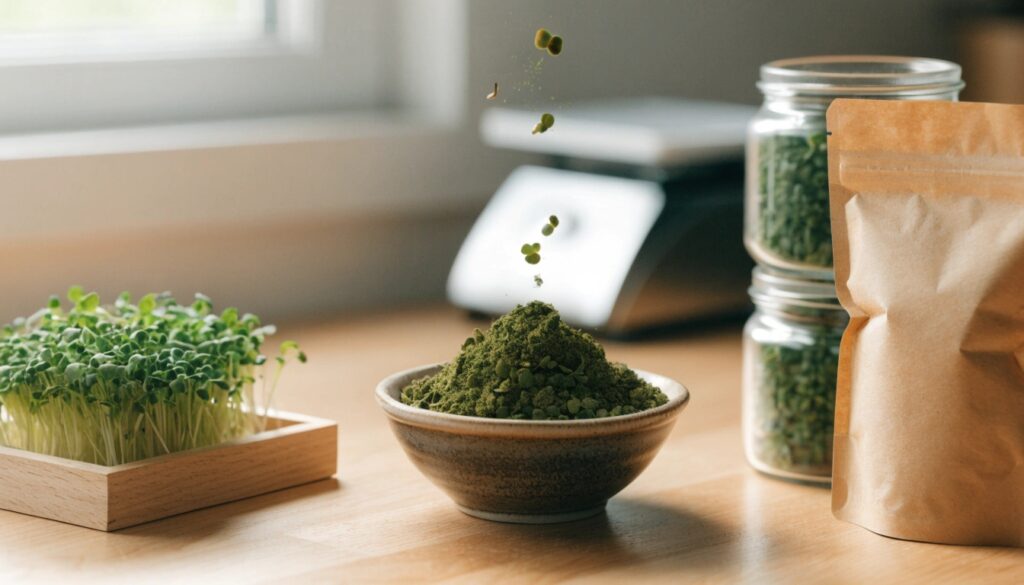
Profitability in this business isn’t just about how much you charge per bag. It comes down to a few core factors working together.
1. Yield Loss From Drying
Fresh microgreens are mostly water. Once dried, they lose a large portion of their original weight and volume. This means you need a good amount of fresh product to produce a small amount of dried powder or flakes — and your pricing has to reflect that.
2. Equipment and Setup Costs
Drying requires equipment such as a dehydrator or similar device, along with tools for grinding, sealing, and labeling. These are upfront investments that need to be factored into your break-even calculations before you assume a profit.
3. Packaging Costs
Because dried microgreens are sensitive to moisture and light, packaging needs to protect freshness. Better packaging often costs more, but it also protects shelf life, which matters if you’re selling through retail stores instead of only direct to local customers.
4. Market Demand and Buyer Type
Who buys your dried product matters. Health food stores, specialty grocers, chefs, and direct-to-consumer customers may all value the product differently. Selling wholesale usually means lower prices per unit but more consistent volume, while direct sales can bring higher margins but require more marketing effort.
Step-by-Step Guide to Evaluating This Business Model
If you’re trying to figure out whether this model makes sense for you, work through these steps before investing heavily.
- Start with a small test batch. Dry a known weight of fresh microgreens and record how much dried product you get. This gives you a real shrinkage ratio to work with.
- Calculate your cost per unit. Add up growing costs, drying time, packaging, and labor, then divide by the amount of finished product.
- Compare that cost to realistic selling prices. Look at what similar dried greens or powders sell for in your target market.
- Identify your ideal buyer. Decide early whether you’re targeting retail stores, restaurants, or direct-to-consumer sales, since this affects pricing and packaging choices.
- Check food safety and labeling requirements. Rules can vary by state and by how the product is sold, so it’s worth confirming requirements before you sell publicly.
- Test the market before scaling. Sell a small batch locally or online first, rather than investing in large equipment right away.
Common Problems or Mistakes
Many new sellers run into the same issues when starting a microgreens drying and packaging business.
- Underestimating shrinkage. Growers often expect more finished product than drying actually yields, which throws off pricing.
- Pricing too low. Because fresh microgreens are usually inexpensive, some sellers carry that same pricing mindset into the dried product, even though production costs are higher.
- Ignoring packaging quality. Cheap packaging can lead to faster spoilage, which damages trust with customers and retailers.
- Skipping a test batch. Jumping straight into bulk production without testing shrinkage and market interest can lead to wasted inventory.
- Not identifying a clear buyer first. Producing the product before knowing who will buy it often leads to slow sales.
Helpful Tips
- Keep detailed records of every test batch, including fresh weight, dried weight, and time spent, so you can refine your process.
- Consider starting with one or two microgreens varieties known for strong flavor when dried, rather than trying many at once.
- Ask potential buyers directly what they’d expect to pay before setting your final price.
- Reinvest early profits into better packaging rather than more growing space, since packaging quality often affects repeat sales more than production volume.
- Keep your process simple at first. A smaller, well-tested product line is easier to manage than a large one with unclear demand.
Frequently Asked Questions
1.Is drying and packaging microgreens more profitable than selling them fresh?
It can be, since dried products last longer and can be priced higher per ounce. However, drying reduces total product weight, so profitability depends on pricing correctly for that shrinkage.
2.How much dried product do you get from fresh microgreens?
This varies by variety and moisture content, but expect a significant reduction in weight and volume after drying. Testing a batch yourself is the most reliable way to know your ratio.
3.Do I need special equipment to start this business?
Yes, at minimum you’ll need a reliable drying method and basic packaging tools. Equipment quality can affect both product consistency and long-term costs.
4.Who typically buys dried microgreens products?
Buyers can include health-focused retailers, chefs, wellness brands, and direct-to-consumer customers who want a shelf-stable option.
5.What packaging works best for dried microgreens?
Packaging that protects against moisture and light generally helps preserve freshness longer, which matters for both shelf life and customer satisfaction.
6.Can I start this business from home?
It’s possible for small-scale production, but rules around food businesses vary, so it’s important to check local and state requirements before selling publicly.
7.What’s the biggest mistake beginners make with this business model?
Not accounting for shrinkage and packaging costs when setting prices, which can quietly eat into profits even when sales are steady.
Conclusion
A microgreens drying and packaging business model can be profitable, but it depends on understanding shrinkage, equipment costs, packaging, and who your buyer actually is. The growers who succeed with this model usually start small, test their numbers with real batches, and price based on actual costs rather than guesswork. If you’re considering this path, start with a single test batch, track your numbers carefully, and build from there instead of scaling too quickly.
Author: Muhammad Ahmad
M. Ahmad is an SEO and GEO Specialist and the Founder of Careerzon.org, a platform dedicated to career development and professional growth. He helps readers navigate job searching, resume building, career planning, and skill development through clear, practical, and easy-to-follow guidance. Combining his SEO and GEO expertise with a focus on career content, M. Ahmad ensures Careerzon.org delivers helpful, people-first advice that’s easy to find and easy to understand — whether you’re searching on Google or asking an AI assistant.
Also Read: