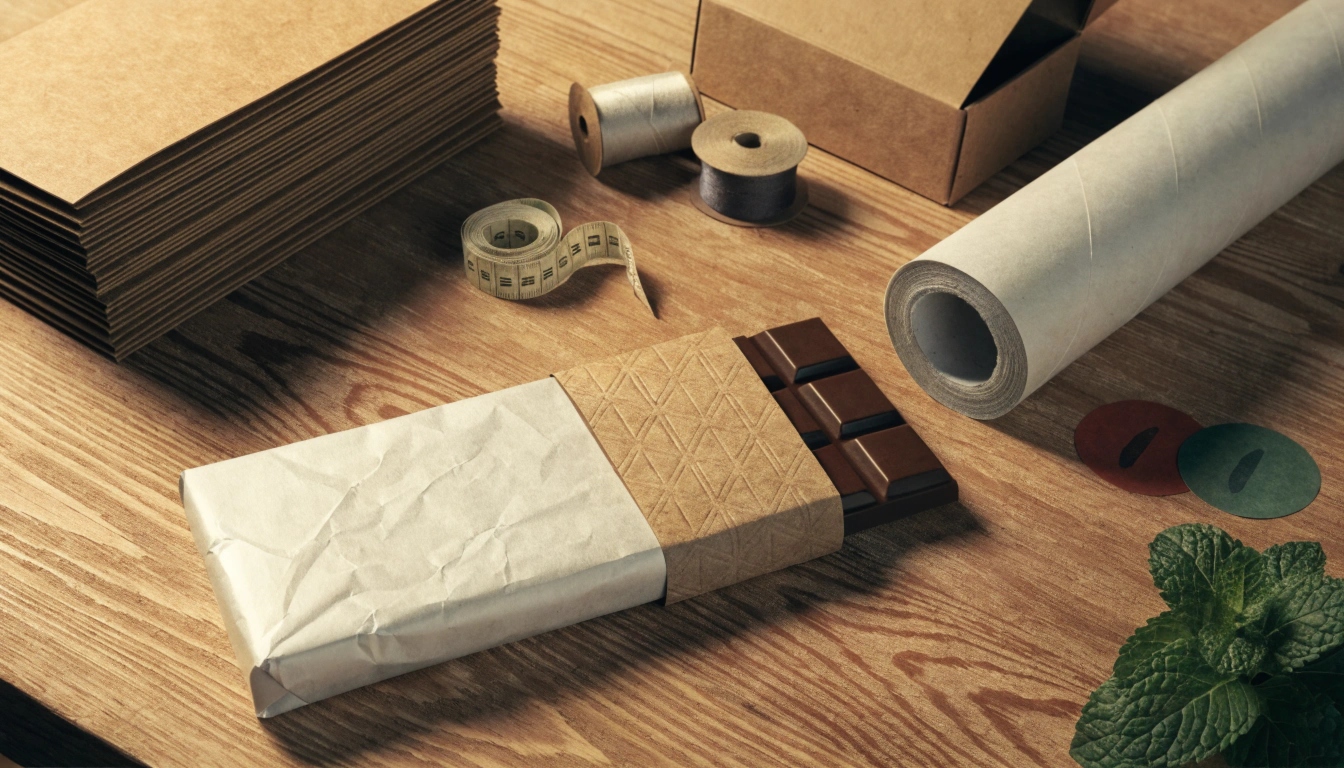
Chocolate Bar Packaging Solutions for Small Business
If you’re seeking chocolate bar packaging solutions for small business, the short answer is this: you have more affordable, low-commitment options than big suppliers usually advertise. Small paperboard sleeves, foil wraps, custom printed labels, and low-minimum order printers all let you package chocolate bars professionally without spending like a factory.
This guide walks through the real options, the mistakes small chocolate makers commonly make, and how to pick packaging that protects your chocolate and looks good on a shelf — even if you’re working from a home kitchen.
Quick Answer
For small businesses, the best chocolate bar packaging usually combines a foil or wax inner wrap (to protect the chocolate) with a printed paperboard sleeve or box (for branding). Look for suppliers with low or no minimum order quantities, since most small chocolatiers don’t need thousands of units at once. Start simple, then upgrade your packaging as your order volume grows.
Understanding Your Packaging Needs
Before comparing packaging types, it helps to know what chocolate packaging is actually supposed to do. It’s not just about looks.
Good packaging protects chocolate from heat, light, moisture, and odors. Chocolate is sensitive — it melts easily, absorbs smells from nearby products, and can develop a whitish film called bloom if it’s exposed to temperature swings. Packaging is your first line of defense against all of that.
At the same time, packaging is often the only “sales pitch” your product gets on a shelf. For a small business, that means your packaging needs to do two jobs at once: protect the product and represent your brand.
Why This Matters More for Small Businesses
Larger chocolate companies can afford custom molds, foil printing, and bulk box orders. Small businesses usually can’t. That’s why so many small chocolate makers feel stuck — they want packaging that looks professional but can’t justify ordering 10,000 units.
This is one of the biggest pain points small business owners run into: finding packaging that’s both affordable and high quality, without a huge upfront order.
Common Chocolate Bar Packaging Options
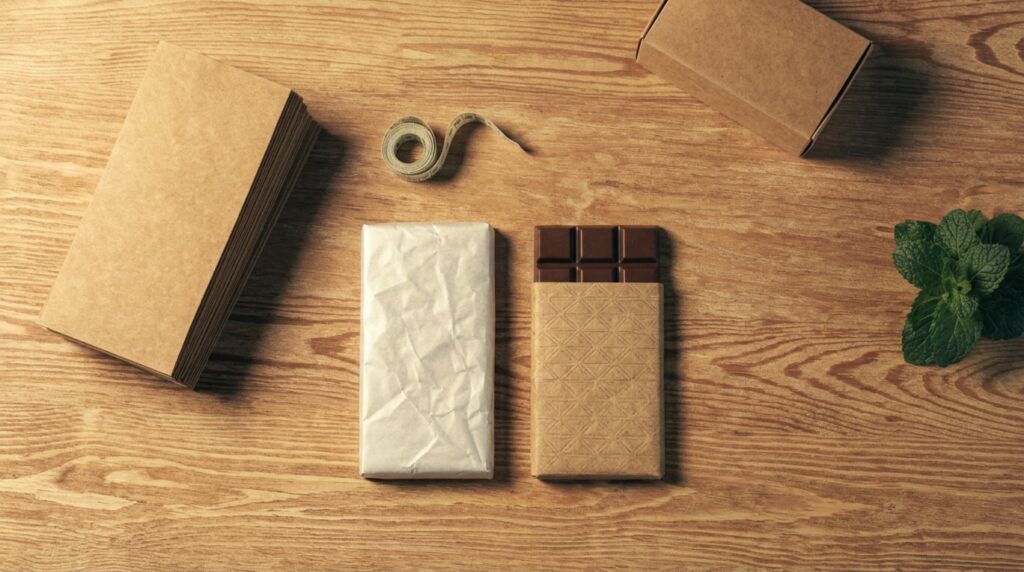
There isn’t one “correct” packaging setup. Most small businesses use a combination of the options below.
Foil or Wax Paper Inner Wrap
This is the layer that touches the chocolate itself. Food-safe foil or wax paper helps block light and moisture, which slows down melting and bloom. Many small businesses start here because it’s inexpensive and available in small quantities from craft and packaging suppliers.
Paperboard Sleeves
A printed paperboard sleeve slides over the foil-wrapped bar and carries your branding — logo, flavor name, ingredients, and any required labeling. Sleeves are popular with small businesses because many printers offer them with low minimum orders and shorter turnaround times than full custom boxes.
Custom Printed Boxes
Boxes offer more surface area for branding and extra protection, which is useful for shipping or gift sets. They typically cost more per unit than sleeves, so they make more sense once your order volume grows or if you’re selling a premium product line.
Stickers and Labels
If you’re working with a tight budget, printed stickers or labels applied to plain wrap or a simple box can be a smart starting point. This lets you test your branding and market response before investing in fully custom printed packaging.
Step-by-Step Guide: Choosing Your Packaging
- Define your budget per unit. Decide how much you can realistically spend on packaging for each chocolate bar without cutting into your profit margin.
- Check your order volume. Small businesses often need packaging in the dozens or low hundreds, not thousands. Look for suppliers who accommodate this.
- Choose your protective layer. Pick a food-safe inner wrap (foil or wax paper) that fits your bar size.
- Choose your branding layer. Decide between a printed sleeve, a sticker on plain wrap, or a custom box based on your budget and image needs.
- Confirm labeling requirements. Make sure your packaging design leaves room for required information like ingredients, allergens, and net weight.
- Order a small test batch. Before committing to a large order, test a small batch to check fit, print quality, and how well it protects the chocolate.
- Reassess as you grow. As your sales increase, you can move to larger minimum orders for better per-unit pricing.
Common Problems or Mistakes
Many small business owners run into the same packaging issues. Here’s what to watch for:
- Ordering too much, too soon. Committing to a large print run before testing the design can waste money if changes are needed later.
- Skipping the protective layer. Using only a printed sleeve without foil or wax paper underneath can lead to melting, blooming, or a shortened shelf life.
- Ignoring labeling rules. Forgetting to leave space for ingredients, allergens, or weight information can force a costly redesign.
- Choosing packaging that doesn’t match order size. Some suppliers are built for bulk orders only, which isn’t practical for a small batch business.
- Overlooking storage and shipping. Packaging that looks great on a table might not hold up well during shipping or in a hot car — test it under real conditions.
Helpful Tips
- Ask suppliers directly about their minimum order quantities before designing anything — this saves time later.
- Keep your first packaging design simple. A clean, readable label often performs better than a busy, overdesigned one.
- If sustainability matters to your customers, ask suppliers whether their materials are recyclable or compostable, since options vary by supplier and material type.
- Store extra packaging materials in a cool, dry place so they don’t get damaged before use.
- Reorder packaging in smaller batches at first so you can update your design as your branding evolves.
Frequently Asked Questions
1.What is the best packaging for a small chocolate business?
A combination of a protective inner wrap, like foil or wax paper, with a printed sleeve or label usually works well for small businesses. It balances protection with affordable branding.
2.Do I need special packaging to sell chocolate bars legally?
Yes, most chocolate sold to the public needs labeling that includes ingredients, allergens, and net weight. Requirements can vary, so it’s worth checking with your local health or food safety authority.
3.Can I package chocolate bars without buying in bulk?
Yes. Many packaging suppliers and printers offer small minimum order quantities that are suitable for home-based or small chocolate businesses.
4.What keeps chocolate from melting in packaging?
A protective inner layer, like foil or wax paper, combined with storing chocolate away from heat and direct sunlight, helps slow down melting.
5.Is eco-friendly chocolate packaging a good option for small businesses?
It can be, depending on the supplier and material. Ask about recyclable or compostable options and confirm they still protect the chocolate properly.
6.How do I design my own chocolate bar packaging?
Many small businesses use simple design tools to create labels or sleeves, then work with a printer that supports small custom orders. Starting with a basic design and improving it over time is a common approach.
7.Should I use a box or a sleeve for chocolate bars?
Sleeves are usually more affordable and work well for everyday sales. Boxes offer more protection and branding space, making them a good option for gift sets or premium products.
Conclusion
If you’re seeking chocolate bar packaging solutions for small business, the key is starting simple, protecting the chocolate properly, and avoiding large orders before you’ve tested your design. A basic combination of a foil or wax inner wrap with a printed sleeve or label gives most small businesses a professional look without a big upfront cost. As your business grows, you can scale up to custom boxes and larger orders with more confidence.
Author: Muhammad Ahmad
M. Ahmad is an SEO and GEO Specialist and the Founder of Careerzon.org, a platform dedicated to career development and professional growth. He helps readers navigate job searching, resume building, career planning, and skill development through clear, practical, and easy-to-follow guidance.
Combining his SEO and GEO expertise with a focus on career content, M. Ahmad ensures Careerzon.org delivers helpful, people-first advice that’s easy to find and easy to understand — whether you’re searching on Google or asking an AI assistant.
Also Read: