Why Is It Called a Money Tree? Origin & Meaning
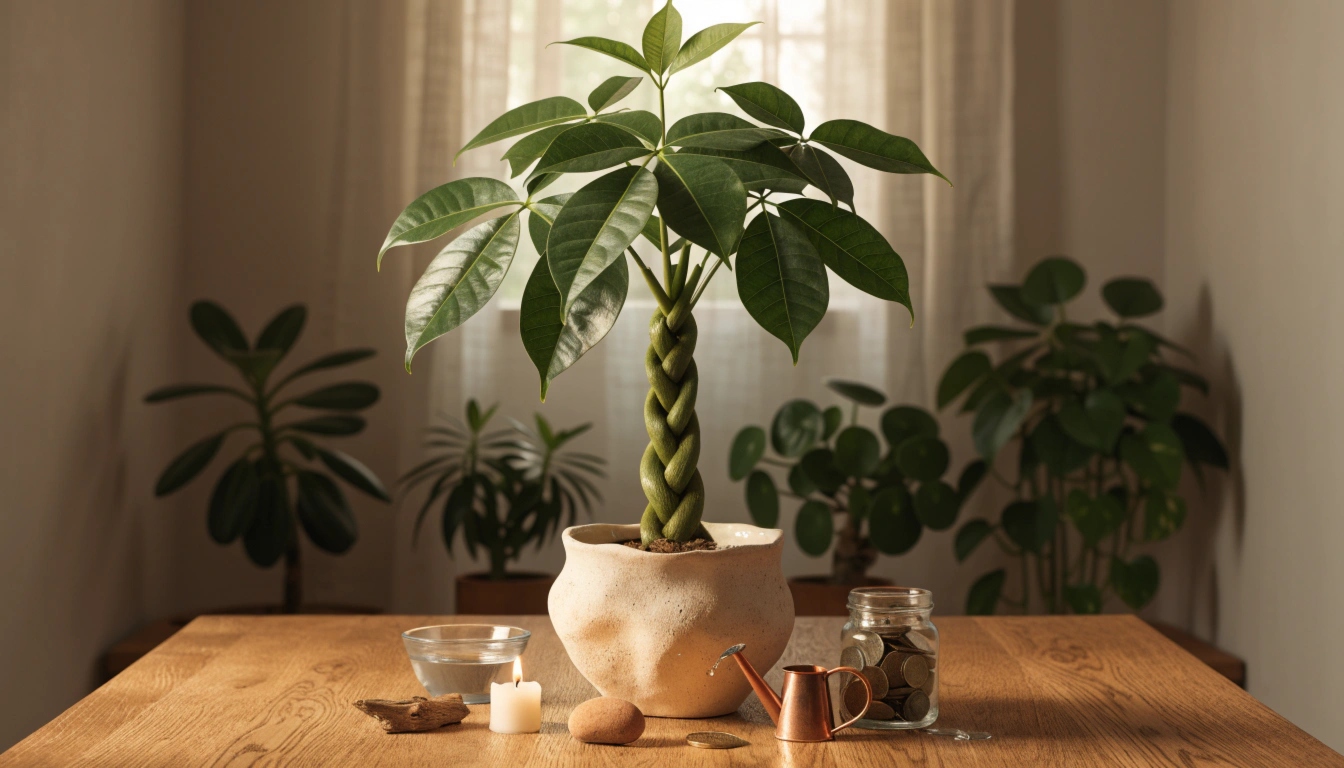
Why is it called a money tree? The name comes from a popular legend about a man in Taiwan who grew rich after growing and selling this plant. It also comes from feng shui beliefs, which say the plant’s leaves and braided trunk attract and hold on to good fortune.
That is the short version. But the full story is more interesting. It also has a few twists, because more than one plant goes by this name.
In this guide, you will learn where the name came from, what the braided trunk means, which plants get mixed up, and what is belief versus fact.
Quick Answer
The money tree (Pachira aquatica) is called that because of a Taiwanese legend about a man who became wealthy by growing it, and because feng shui tradition links its five-lobed leaves and braided trunk to luck and money. It is a cultural belief, not a scientific fact. The plant itself is a tropical tree from Central and South America.
What Is a Money Tree?
The plant most people mean is Pachira aquatica. In the wild, it grows in wet, swampy areas of Central and South America. Outdoors in the right climate, it can grow into a large tree.
In the United States, you will usually see a small version in a pot. It often has a thick, braided trunk and shiny green leaves. You can find it at garden stores, grocery stores, and online plant shops.
Why the Leaves Matter
Each leaf is made of several smaller leaflets that spread out like fingers. Most healthy stems carry five of them. In feng shui, five leaflets are often linked to the five elements: wood, fire, earth, metal, and water.
Some people also say a stem with seven leaflets is extra lucky. This is a fun belief, but it is not a rule that can be proven.
The Legend Behind the Name
The most common story says a poor truck driver in Taiwan prayed for money. One day he found a small plant by the road and took it home. He grew several of them and braided their stems together. He then sold the braided plants and became wealthy.
The story is often placed in the 1980s. Different websites tell it with different details. For that reason, it is best to treat it as a legend, not recorded history.
Why You See So Many Versions
One reason for the confusion is that the story has been retold many times. Each retelling changes small parts. Some versions say the man prayed. Others say he simply grew the plants well.
The core idea stays the same: a person grew this plant and found success. That idea is what stuck, and it is why the plant became a popular symbol of money.
Why Is the Money Tree Trunk Braided?
There are two answers, and both can be true.
The belief: Feng shui teaches that braiding the trunks “locks in” good fortune so it cannot slip away.
The practical reason: Growers often braid several young, flexible stems together. This makes a thicker, fuller-looking trunk and a nicer shape for a pot.
So the braid is part tradition and part plant styling.
Which Plant Is the Real Money Tree?
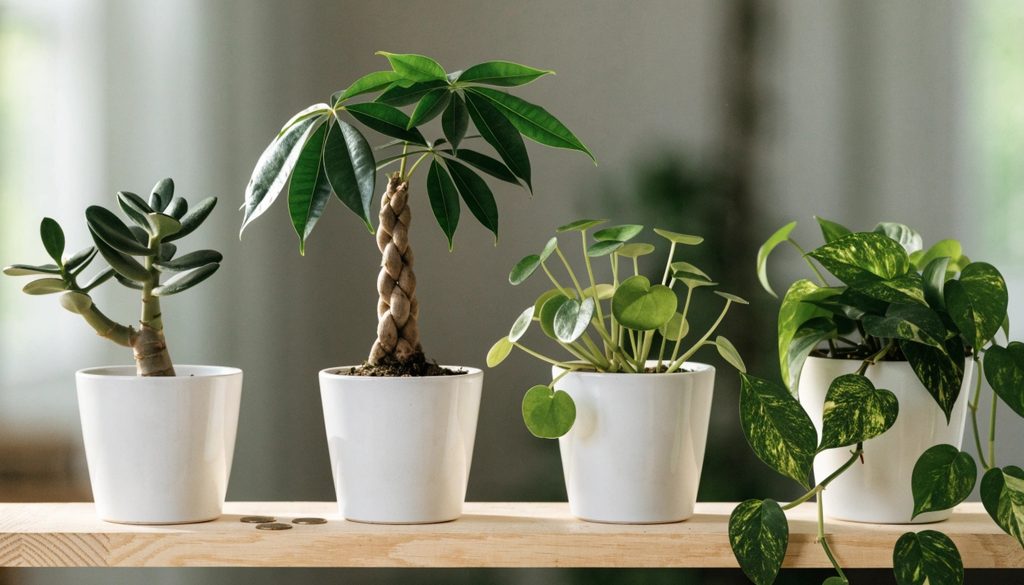
This is where many readers get stuck. Several plants share this name or a similar one. Here is a simple way to tell them apart.
| Plant | Also Called | What It Looks Like |
| Pachira aquatica | Money tree | Braided trunk, leaves with 5 leaflets |
| Crassula ovata | Jade plant | Thick, fleshy, oval leaves |
| Pilea peperomioides | Chinese money plant | Round, coin-shaped leaves on thin stems |
| Epipremnum aureum | Pothos, “money plant” | Trailing vine with heart-shaped leaves |
If you searched “money tree,” you most likely want Pachira aquatica. The jade plant and the Chinese money plant are called lucky for a similar reason: their round leaves look like coins.
My Advice Before You Believe Any Origin Story
When I research a topic like this, I look for the parts that stay the same across many sources. For the money tree, the steady parts are the plant’s name, its feng shui link to wealth, and the Taiwan legend.
The exact details change from site to site. My advice is simple: enjoy the story, but do not treat small details as proven facts. If a page gives an exact date or name without a source, be careful.
Also, no plant can promise money. Think of it as a lovely symbol and a nice houseplant, not a financial plan.
Step-by-Step: How to Use a Money Tree the Feng Shui Way
If you like the tradition, here is an easy way to try it. Keep in mind that this is a cultural practice, not a guarantee.
- Pick a healthy plant. Look for bright green leaves and a firm trunk.
- Choose a spot. Feng shui fans often suggest the wealth corner of a home or office, which is the far left corner as you enter a room.
- Give it bright, indirect light. A spot near a window with filtered sun works well.
- Water with care. Let the top layer of soil dry out before watering again.
- Keep it clean. Dust the leaves gently and remove any that turn brown.
- Set a goal. Some people use the plant as a daily reminder of a savings or career goal.
Common Problems and Mistakes
Mixing Up Plants
Many buyers pick up a jade plant or a pothos thinking it is a money tree. Check the leaves and trunk before you buy. Look for the braided stem and five-part leaves.
Overwatering
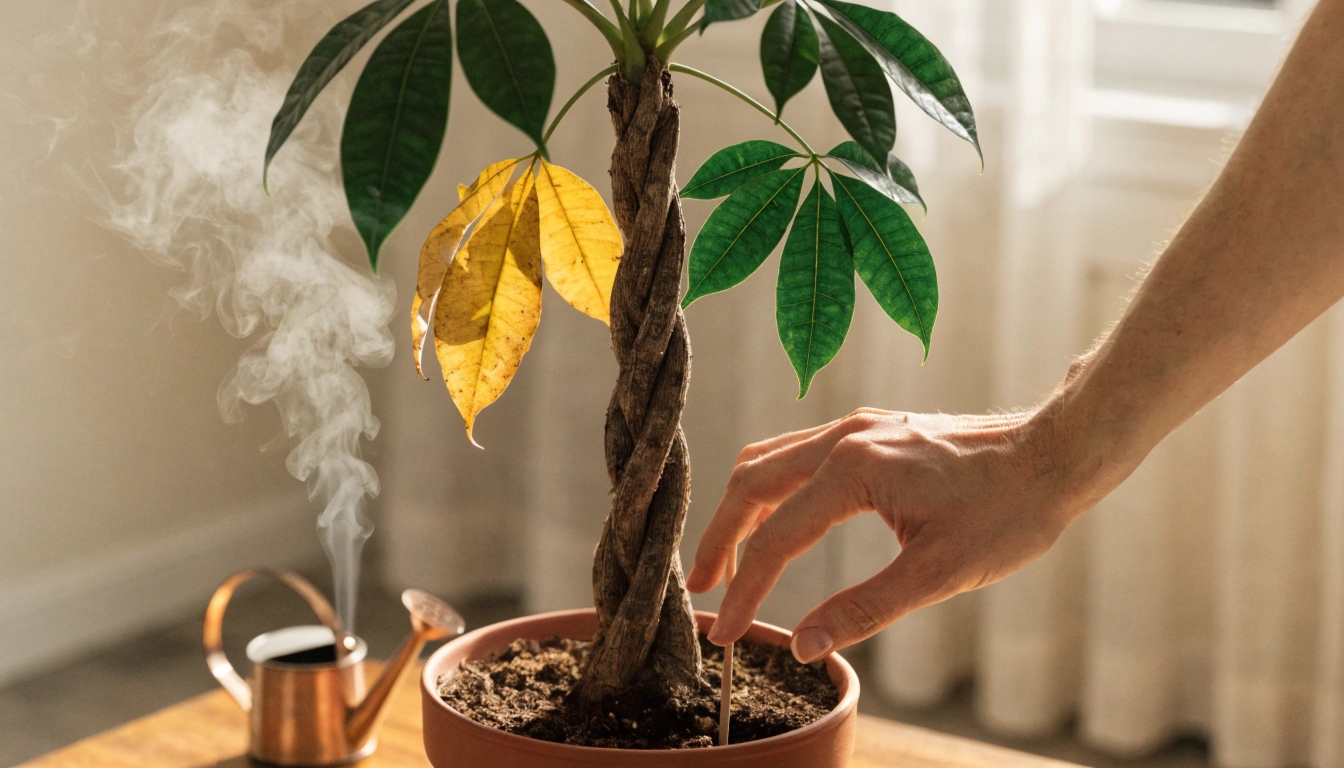
This is the most common reason money trees struggle. Soggy soil can hurt the roots and cause yellow leaves. Water only when the top of the soil feels dry.
Worrying That a Dying Plant Means Bad Luck
Many owners fear that a dying plant means bad luck. There is no proof of this. Plants die for normal reasons, like too much water or too little light. If yours struggles, fix the care and try again.
Getting Lost in Feng Shui Rules
There are lots of rules about leaf counts, placement, and direction. Different teachers say different things. Start with one or two simple ideas, like good light and a tidy space, and skip the rest if it feels stressful.
Helpful Tips
- Gifting one? Add a short card explaining the legend. It makes the gift feel thoughtful and gives you something to say.
- Buying for yourself is fine. There is no widely accepted rule that says you cannot.
- Check pet safety. Check a trusted source, such as the ASPCA plant list, before bringing any plant home with cats or dogs.
- Do not eat it. The plant is sold for decoration, not as food. Leave the snacking to the grocery store.
- Use good light. Bright, indirect light helps the leaves stay full and green.
- Be patient. Plants grow slowly. Give yours a few weeks to settle in after a move.
Frequently Asked Questions
1.Does a money tree really bring money?
No plant can guarantee money. People value it as a symbol of luck and a reminder to stay focused on their goals.
2.Why does a money tree have five leaves?
Most stems grow five leaflets naturally. Feng shui links the number five to the five elements: wood, fire, earth, metal, and water.
3.What is the difference between a money tree and a jade plant?
A money tree has a braided trunk and leaves with five leaflets. A jade plant has thick, fleshy, oval leaves and a woody, branching shape.
4.Is a Chinese money plant the same as a money tree?
No. The Chinese money plant (Pilea peperomioides) has round, coin-like leaves. The money tree (Pachira aquatica) has a braided trunk and leaves split into leaflets.
5.Is it bad luck if a money tree dies?
There is no proof of this. Most plants die from care problems like overwatering or low light, not from bad luck.
6.Where should I put a money tree?
Pick a bright spot with indirect light. If you follow feng shui, many people choose the far left corner of a room as seen from the door.
Conclusion
So, why is it called a money tree? The name comes from a Taiwanese legend about a man who found success by growing it, along with feng shui beliefs that tie its leaves and braided trunk to wealth. The story is charming, but it is a legend, and the plant cannot promise riches.
What it can give you is a green, easy-to-love houseplant and a nice symbol for your goals. Your best next step is to pick the right plant, give it bright light, avoid overwatering, and enjoy the story behind it.
Author Bio
MUHAMMAD AHMAD
SEO Specialist Founder & Owner Of TechXora.org and CareerZon.org
Also Read: